Friday, 18 July 2008

The First Step

This summer I thought it was time to get to know myself better. In the two and a half years since I left home, and particularly in the last twelve months I've been constantly on the move. I came across new cultures, people and customs. It was great to experience it all, but in the end it was a bit too much. Why? Well, inevitably being exposed to so much in such a short time left a major footprint on my personality. In other words, I simply changed. However, being busy jumping from one spot to another, I was left with little time to take note of these changes and got a bit lost. I became confused because I didn’t know how to lead my life. Particularly, I wanted to know, what is the right balance between work and leisure in life.

The wanderer above the sea of fog
Caspar David Friedrich

Mom, I'm staying at home this time!

Yes, instead of pursuing yet another adventure, I thought, this summer it was time to sit back, relax and contemplate. Primarily, I thought the best way to do this would be through reading biographies of men that had managed to make history as great leaders. This way, I would be able to see better how to lead my life to fulfil my ambitions. I also decided to go through some essential literature on the subjects that interest me professionally, in order to find out what I really want to do in life.

I made the following list of essential reading:

• Caesar: Life of a Colossus – Adrian Goldsworthy
• Napoleon: The Path to Power – Philip Dwyer
• Cicero on the Ideal Orator (De Oratore) – Cicero
• Art of War – Sun Tzu
• Ogilvy On Advertising – David Ogilvy
• The Four Pillars of Investing – William Bernstein
• The Intelligent Investor: The Definitive Book on Value Investing – Benjamin Graham

Why these books?

They are simply one of the best on these topics! Three of the books above ("Caesar", "Art of War" and “The Four Pillars”) I already wanted to read for a while. So, I set off with the excellent biography of Julius Caesar. I immediately became aware of my next target: Napoleon Bonaparte. To put their stories into perspective I choose to include in the list the well know Art of War by Sun Tzu. On top of this I thought it would be useful to read De Oratore by Cicero – the best orator in the history of the ancient Rome – which gives a deep insight into the art of oratory, yet another essential component of leadership, and so politics as well.

Following this I turned to my professional interests: marketing and finance. Ogilvy on Advertising, by the “father of advertising” David Ogilvy, is an interesting study of the subject and I want to find out more about it. Next, I chose to study investing. Here I began with the “Four Pillars” and plan to move on to “The Intelligent Investor”, by the greatest investment theorist EVER - Benjamin Graham (Warren Buffet’s professor and mentor!).

This is the first step

This is how I am trying to find out what I really want to do in life but also what really I can do. The next step is to learn more about life itself. How can I be happy while working hard to fulfil my ambitions? How can I get rid of some of my weaknesses, particularly within the sphere of social interaction? I will take on this subject in my next post.

Sunday, 13 July 2008

Summer 2008

I love making plans and creating timetables. I also think I can do it pretty well. But I do suffer from being overly ambitious and keep stacking way too many tasks into relatively little amount of time. That is so often resulting in creating stressful situations, making it even harder to perform well. So, this summer I decided to take it easy. I was extremely busy for the past twelve months and had little to no rest. I lived, worked and studied in three countries after all. So what am I doing this summer? Quite a lot actually!

Summer work is pleasure
La vigne rouge by Vincent van Gogh

Three Step Personal Development Plan

First: I decided to learn more about people and issues related to my ambitions. Here my plan was to read biographies of the most renowned leaders and books concerned with areas of my professional interests. Ultimately, through this I hope to learn more about myself and define what is the meaning of “being successful”.

Second: I decided to broaden my perspectives by learning more about matters not usual for a typical business student. I started with: fashion, dance, cooking, and art. But I thought I should go even further and set upon practicing such trivial tasks such as hairstyling and ironing. The bottom line was: any new skill is progress. Progress means development. And I want to develop.

Third: I decided to become a member of the “I shouldn’t have” club. How does it work? It’s simple. Whenever there is an opportunity to do something, but I feel that it either “will not work” or that “ I can’t be bothered” etc., I just do it! No regrets allowed. I simply go for it, whatever it is.

But why?

In a series of future posts I will attempt to explain the particular motivations that were behind devising these three steps. I promise I will try to keep it interesting!

Monday, 9 June 2008

Thoughts on Angriness

We all get angry and we all know how devastating effects such behaviour can have on the people around us. Why do we act in this way, so often without real reasons? Why do we loose control and act in the total opposite of the way we should and normally do? It is not an easy task to answer these questions! By no means I am trying to do so, but, as usual, provide a bit of an insight. To start with, take a look at the following account of a recent incident that involved my father and me.

The situation

It was a beautiful and sunny day and we planned with my dad to have a dinner on our rooftop terrace. My dad had an appointment at 7 PM and had to leave at 6:30 PM. So we decided to start preparing the meal at 5 PM. But 5 o’clock came and went and I only saw my father in the kitchen at about 5:45 PM. We both, not being used to early dining had forgotten to start cooking. As it usually happens, my dad went to cook and I was going to prepare the table. However, I did not look at the watch and had no idea how late it really was. More than half way through my task, I thought I needed a cold shower because I felt a bit sick from the hot temperature (it was actually VERY hot that day). So I went to have a shower thinking that it will be a while before my father could finish cooking and that I would still have time to finish preparing the table before he actually would do so. I told my father what I was going to do and jumped under the cold water. To my surprise, after taking the shower I saw my father already eating. As I was taking my seat, he made angry remarks about my failure to prepare the table, implying that I would be me fault if he was late for his appointment, and showing discontent with my performance. I argued that I had no idea how late it was and should not be treated in this way, especially because it was him who did not show up in the kitchen on time at first place. Because it was his appointment, it was also his responsibility for the dinner to be on time. We settled there.

Crime scene

This is the case. But what does it mean?

I should begin with yet another question. Namely, why is that a mature man, who knows how to use his brain (wrote several books, speaks six languages!) behaves in this irresponsible way? After all, this situation had no effect on the final outcome of the case – he wasn’t late in the end, and it was easy to see that he wouldn’t be. It only brought discomfort to the both of us (why ruin such a beautiful day anyway?). Even if I did not prepare the table on purpose, why respond with anger and aggression rather than trying to find out what really went wrong and attempting to fix it?

Fight or flee?

I am sure that there is more than one factor written into this. But one particularly seems on heavy duty here. Which one is it? We are all familiar with the “fight or flee” concept. This is where the answer lies.

Our brain is divided into several parts. Amygdala is one of the most primitive regions of the brain, the seat of fear and aggression. It is the impulse centre that controls our decisions when our thinking shuts down. In the words of the psychiatrist Edward Hallowell:

“When those deep brain areas are active, they shanghai your cortical neurons. Your IQ plummets. Your creativity, your sense of humour – all of that disappears. You’re stupid. ”

So, it appears that in stressful situations we can be prompted to enter the fight or flee mode, sometimes for no obvious reasons. In this mode we are not able to make rational choices. We loose control because our decisions are handled by amygdala not by the cortex, which does so under normal circumstances.

Taking control... of yourself!

Now, what is the point that I am trying to make here? Take another look at my father’s reaction in the case above. Now, consider the following alternative.

- My dad, thinking to himself: “Ok, the table is not ready, and I can be late. But there is nothing that will change the past. I must act to lessen the consequences. I can use this situation to demonstrate to my son why he shouldn’t leave a job undone. We can also learn about how important communication under pressure is.”

Can you see how different the picture of my father when comparing the above with the actual situation is!? It is very easy to see the contrast between them two. What is it? It’s control. My dad’s reaction was a sign of him not controlling himself, whereas in the alternative scenario he was totally in control.

So, the point that I am trying to make here is that stressful situations which we all go through on a regular basis whether at school, work or a crowded train home can easily be turned to our advantage if only we are able to handle our emotions. It is not the above average leadership skills, not the high IQ, not even mastering the art of the rhetoric, but simply being able to handle that “inner caveman” what really matters when trying to win others. Or in the words of Jeffrey Fox, author of How to Become CEO:

“Keep yourself in control so that you can keep control of the situation”.

Easier said than done? Maybe. But this is exactly why YOU can make a difference. Most of the others will have already given up!

Saturday, 24 May 2008

The American Dream

My American Dream has ended and I am back in Europe (Amsterdam to be more precise). But even though I am long gone from Williamsport, I continue to struggle with shaping up a coherent answer to the question that I have asked upon my arrival in the USA, namely, how real is that image that we are buying into when watching American movies, listening to American music and buying American brands?


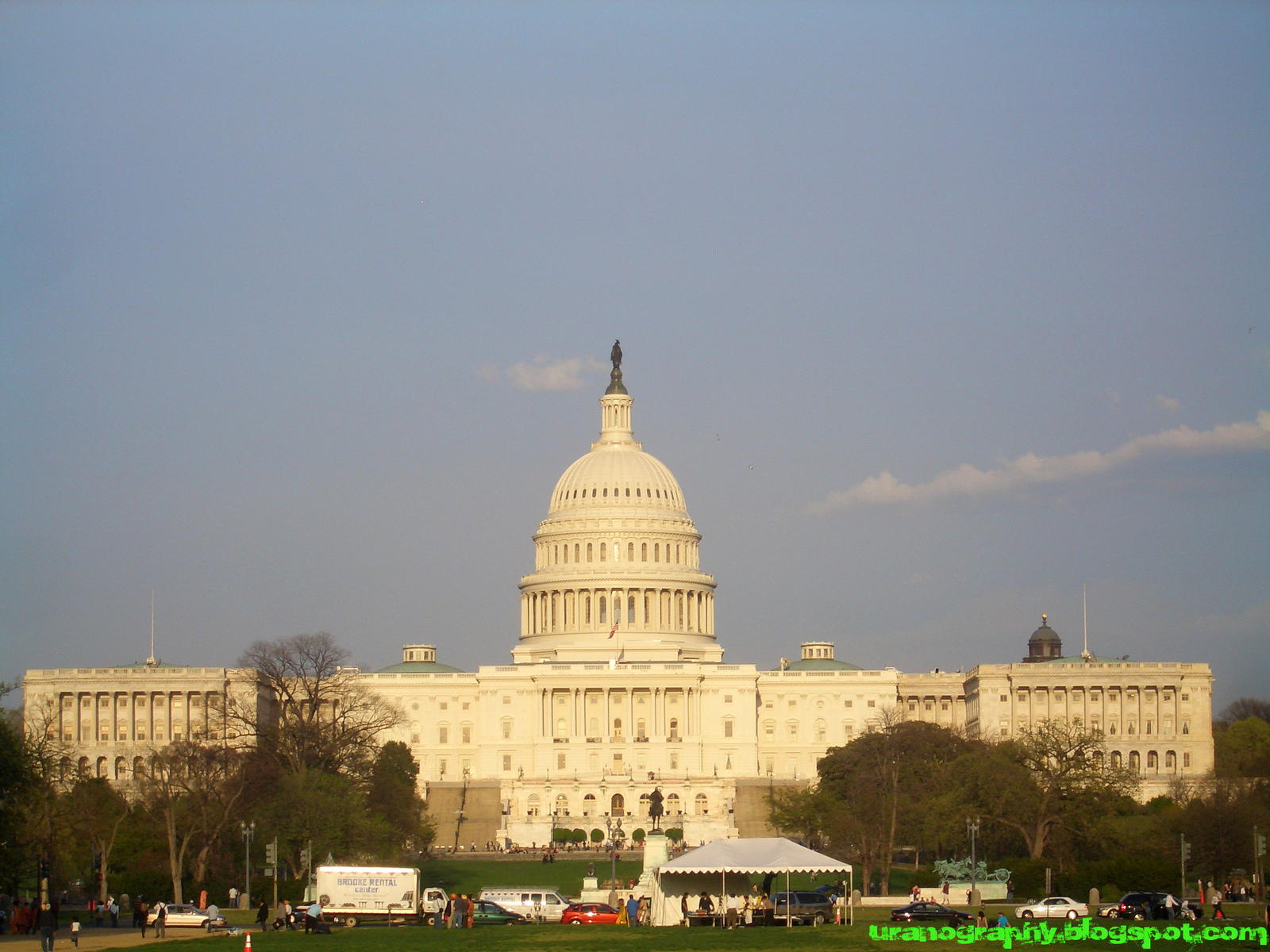
United States Capitol


Now, I still need more time (and probably more hands-on experience!) but I am becoming more and more convinced that that image is certainly true in one aspect: America is Freedom. In this context, using American brands etc allows us to get a bit of that freedom for ourselves. It is this feeling, of being able to achieve anything one wishes for, that I certainly had when living there. It was the sense of immense liberty and independence that made me feel as if there was nothing that could stop me from achieving my dreams. It is a whole another question whether this freedom is actually fairly utilised by the American people, but one thing is for sure: freedom in America is like nothing else!

PS. The funny thing was, after coming back, I decided to sign up to a local gym. On my way there I thought: "It was fun to listen to American radio (Kiss Fm!), I liked the songs that they used to play. Will miss that...". To my surprise, the first thing I noticed when entering the new gym was the same song I used to hear over and over again when working out in the gym in my college:D


Wednesday, 23 April 2008

Great Success!

Last week the Business Plan Contest ended and guess what? I won the “Best New Technology Product” award for Integrain Technology!!!

It was really an amazing experience. Not only I learnt about the difficulties (cost!) of starting up a company, but also had a great time, challenging myself everyday to find new and innovative ways of making it all work. The presentation I had to give in the final round taught me a great deal as well. I learnt so much about the art of rhetoric (Yes, one of the judges could easily replace Simon Cowell on the American Idol jury board!) and about the importance of enthusiasm in presenting to others.

I would like to thank all the people that had an input to this work as well as those who supported me in what were sometimes difficult times. Thank you! You are really a great bunch!

And of course, thank you America! You are the greatest!


Click on the image to follow the link to the Keystone Innovation Zone website (sponsor of the contest)


Click on the image to follow the link to Lycoming College News website


PS. You can see my professors, Dr Bonita Kolb and Dr Mehrdad Madresehee on the left and right hand side of the picture respectively. I will miss them so much...

Monday, 7 April 2008

Soft Skills – Solid Results

“It takes no genius to observe that a one-man band never gets very big” - says Charles Garfield, one of America's leading authorities on high achievement. The matter is indeed very simple: we do have to work in teams to achieve more. But as in everything in life, there is a catch. Working with others involves a great deal of extra effort, which we are no always willing to undertake or just don’t know how to do it. The truth is, in most cases our upbringing and school life is not representative of what awaits us in our professional life. This way we are by default deprived of becoming what is called “street smart”. Soft skills are one of the elements of being street smart. Soft skills determine how we interact with one another.

What to do then, to get things “right”, if for some reason you have not been blessed with mastering soft skills so far? First of all practice! “Practice what!?” you might say. Luckily, last week, Lycoming College hosted an event titled “Secrets to Success – Mastering Soft Skills”. It was a set of six 10-minute presentations delivered by the school’s students. Here are some interesting facts that should help answering this question.

Presentation I – Small Talk
Conversation Criminals (don't be one of them!):
1. The FBI Agent – asks a lot of questions, does not wait for your answer.
2. The One-Upper – always has done better than you have.
3. The Monopoliser – does not stop talking.
4. The Poor Sport – changes open ended questions into closed ones.
5. The Adviser – gives advice no matter whether you want it or not.

Presentation II – Written Communication
• Most important piece of information first.
• Emphasis is on your audience.
• Use plain English - clear and concise, free of technical terms.

Presentation III– Group Communication
• Cohesiveness is the degree to which group members want to stay in the group and are committed to the group.
• Cohesiveness leads to increased productivity.
• Competition decreases cohesiveness.

Presentation IV – Presentational Speaking
Follow the format:
A. Tell them what you’re going to tell them.
B. Tell them.
C. Tell them what you told them.

Presentation V – Arguing Constructively
Objective: find common ground, not attack.

Presentation VI – Leadership
The leader has five contributions to team effectiveness:
• Create a shared vision.
• Appropriately allocate resources.
• Build mutual trust, respect and cooperation.
• Competently motivate members of the group.
• Committed to improvement.

As you can see, soft skills do add tremendously to your life, to your self-esteem and ultimately... to your resume. Work on them now, otherwise they will come back and hunt you down in any professional setting you will find yourself in. After all, you may have the best idea but if, primo, you have nobody to help you with it, secundo you cannot communicate it to others and tertio you cannot get people to work on the idea effectively it will still be worth close to nothing, if at all. And remember, practice makes perfect!


Wednesday, 2 April 2008

The Way of the Samurai

“The Book of Five Rings” by Miyamoto Musashi has been in my hands for a couple of days now. There is already so much I want to say with respect to what the book talks about. Nevertheless, I will refrain from doing so until actually will have finished reading. What I will do, though, is share with you a couple of quotes from it. The following are extracts from the first part of the book - The Earth Scroll.

五輪書 宮本 武蔵

“With the science of martial arts of my individual school outlined above, by diligent practice day and night the mind is naturally broadened; (…) For people who want to learn my military science there are rules for learning the art:

1. Think of what is right and true.
2. Practice and cultivate the science.
3. Become acquainted with the arts.
4. Know the principles of the crafts.
5. Understand the harm and benefit in everything.
6. Learn to see everything accurately.
7. Become aware of what is not obvious.
8. Be careful even in small matters.
9. Do not do anything useless.

(…) Once you have learnt the principle, you should not be defeated even in individual combat against twenty or thirty opponents”.

“The science of martial arts is not just a matter of reading these writings. Taking what is written here personally, do not think you are reading or learning, and do not make up an imitation; taking the principles as if they were discovered from your own mind, identify with them constantly and work on them carefully”.

Cool, isn’t?

AMAZON: The Book of Five Rings

Sunday, 30 March 2008

Shaking Hands With Mr President!

For the past few months I was intensively following the primary presidential campaign in the US. It is a great source for learning about leadership, communication but also discipline and perhaps most of all commitment to hard work. I hoped for the presidential race to come to Williamsport. And guess what? Yesterday, the former president of the United States of America – Bill Clinton visited Lycoming College!

How was it? Well, of course - GREAT! What happened then?

Let’s start from the beginning. After coming to USA I was very sceptic about the country. A lot of things did not seem right. In general, it looked as if people were overwhelmingly focused on consumption, living without any consideration for the consequences of their actions. One recent example was in my marketing class. We were talking about product life cycles and the professor asked how many people in the class used energy efficient light bulbs in their houses. Only two out of almost forty people raised hands… It was very worrying. President’s Clinton speech made me realise there is still hope for a change, though.

Topics of the speech

During his 1,5 hour speech Mr Clinton addressed a number of issues. He talked about the war in Iraq, the housing bubble, international relations and global warming.

High performance leadership

Interestingly, global warming was the part of his speech that he put the most effort into. He said some pretty obvious stuff, but approached it from another angle. He basically said that countering global warming would create new jobs. First, infrastructure for increasing energy efficiency would have to be built, creating demand for electronic engineers. Second, somebody would have to lay this infrastructure down. This way new jobs would be created, but even more importantly, jobs that cannot be outsourced to another country (big deal in America right now). Anyway, what he said might not have been a revelation but it was definitely inspirational. It was good to hear directly from somebody in this position that these issues matter.

Rallying the crowd

In the end the crowd looked like hypnotised. I wondered how Mr. Clinton achieved that. A couple of things came to my mind. Most of all, he was a person like everybody else. He did not use a difficult language; he talked about people’s problems and not about superficial and unrelated matters. 

In person

Mr. Clinton used metaphors to explain complex issues to the crowd and also humour to brighten everybody up, constantly pointing at the future. He did say that America's bigges concerns were the economy and the country’s relations with the rest of the world. But rather than using complicated economic terms he said that the aim of this campaign was that when his wife leaves the office, people are better off, seeing a brighter future for their children and coming together rather than moving away from each other.

So in the end I learned two things. First, that there is still hope for America. Second, if you want your message to come across, keep it simple. It will save you time, energy, and it will work best!

UPDATE: video snapshot of the speech on YouTube — Bill Clinton at Lycoming College

Friday, 14 March 2008

Spring Contemplations

The spring break is long over, but it is only now that the first signs of spring start to appear. Indeed, it seems that the world is returning to life. Interestingly, the best evidence of spring this week was my professors' performance, as they all delivered exceptionally good lectures. It is amazing what effect the arrival of spring can have on us!

Fed arrives

An important event took place this week, namely the guest lecture by William H. Stone Jr, the vice president and COO of Federal Reserve Bank in Philadelphia. It was probably the first time that I had an opportunity to meet such a prominent figure and will definitely not forget it. Mr Stone spoke mainly about the responsibilities of the Federal and Central Bank, the difficulty in balancing free market policies and regulations and of course the subprime mortgage crisis.


Bleak economy could use some spring colours

I will be honest, the lecture was very hard to follow. One of the things I learnt was the incredible complexity of financial systems in the market economy. I also realised how many years of practice it takes to develop the level of expertise that Mr Stone has. I can learn about the recession of 1991 and how it was handled from the books, but by no means I can learn what it really takes to handle it well in a real life situation. That is because only experience can utilise knowledge. Or is it the other way round? Or maybe both?

Well, towards the end of the talk I asked Mr. Stone what where his thoughts on the steps the US should take to maintain its economic leadership in the world. In response I heard that the US has gone through many periods in the last decades when similar concerns were raised. Nonetheless, the country always emerged from these battles, becoming stronger at each time. Mr. Stone had no doubt the story would repeat itself this time and after. And it makes sense, considering the cyclical nature of the economy.

The greater danger

But whatever is the true answer one issue here must not be missed. Namely, that, too much experience can cause people to “stick to the script”, neglecting the possibility of things going in way they never went before. That’s where the greater danger may lie. As with anything, having too much of experience seems to have downsides as well. Therefore, I would argue that knowledge is the key to experience, not otherwise, as it allows people to think perceptively, and in a truly innovative way. And it is the common truth that innovation is the only way forward. Additionally, as argued in the previous post, how much we learn from experience is determined to a large extent by how much we know prior to it.

It is a tough subject, hopefully this summer I will be able to put my hypothesis into test and learn more about it. Stay tuned!

Spring, we love you!


Sunday, 2 March 2008

Lessons From Korea PT. 1

In this post I want to share some of my thoughts and reflect on the lessons I have learnt from my trip to South Korea.

Last summer I stayed in Seoul, where I followed a 3-months intensive Korean language course in Korea University. I lived with the family of my good friend Yongjin, who I met shortly after moving to London.

From the outset, my trip really was a crash course in survival rather than a calming holiday. It all started with the surprising announcement by the above-mentioned friend of mine. He would be going away to another city the very next morning after my arrival, for no less then two weeks. That being the case, I had to make my way through this massive city, where hardly anybody speaks English, with just the bunch of Korean phrases I had learnt so far, on my own. Not too mention fighting the effects of the gigantic jetlag and getting used to the very special Korean diet from day one. And this was just the beginning!

With Yongjin on the day of my arrival

These days, the media, and the Internet especially, give the impression that the world is as small place. But my trip made me aware that, in fact, the world may be small but is still so diverse that at times one may think that being in a new place feels like being on a different planet. Korea is one of these places. It really is. The list of these differences is almost never ending. Consider the examples below.

• In Korea, you don’t speak about “him” or “her” but about a brother or sister, an uncle or aunt, regardless whether you are related to them or even know them at all;
• In Korea, people avoid suntan as much as possible as it is associated with poverty and the working class;
• In Korea, newborn children are born with the age of 1, meaning that everybody is one year older than they actually are. Moreover, birthday is only a celebration of one’s birth. People get older on the New Year’s Eve, which happens twice a year. That is due to the fact that as other nations in South East Asia, Koreans also celebrate the Chinese New Year, which is set according to the Lunar calendar which differs from the Gregorian calendar that we use;
• In Korea, one of the most popular sports is playing StarCraft, an 11 years old, two-dimensional computer game!

The cultural differences I encountered had a tremendous effect on the way I started to think. This has been emphasised especially by the Korean language, which has absolutely nothing in common with European languages. Korean forced me to think differently, imposing new rules on the way I expressed myself. It was such an incredible feeling to realise that I could express the same thoughts in a completely different way. However, it was an overwhelmingly hurtful process, which put my nerves to an edge at multiple occasions.

The daily routine - catching a bus home after classess

Nevertheless, as I was adopting more and more to the Korean way of life I recognised that in fact, it was not that difficult to get used to. And after a while I recognised that it was not the case of Korea being so different, but it was my lack of my knowledge about these differences. What immediately stroke me was that change is so difficult for most of us, from the mere fact that it leads us into uncertainty, rather than brings something that is impossible to comprehend. Therefore, there is nothing to fear as long appropriate research is done prior to the planned changes, the data being clearly communicated to anyone affected by the change. In this way the change can be much easier to swallow. Still, I did not know any of that when I came to Korea and survived. Hence, I would say do change as much as possible – you will always learn something from it! Just make sure that the actual process of change does not produce more hurdles than benefits, or, as Barack Obama put it, remember, “It is not only what you change, but also how you bring that change about”.